

Analyzing Young HOF 2026 Class
How recency bias impacts selections and the process hamstrings selectors

(Editor’s Note: This is part of a series on the Pro Football Hall of Fame’s quest to select the Class of 2025 with a new process and personnel. Written by Frank Cooney, a Seniors Blue Ribbon Selection Committee member in his 33rd year as a selector. The Hall of Football is not affiliated with the Pro Football Hall of Fame. Opinions expressed are those of Hall of Football [HallofFootball.substack.com])
🏈🏈🏈🏈🏈🏈🏈🏈🏈🏈🏈🏈🏈🏈🏈🏈
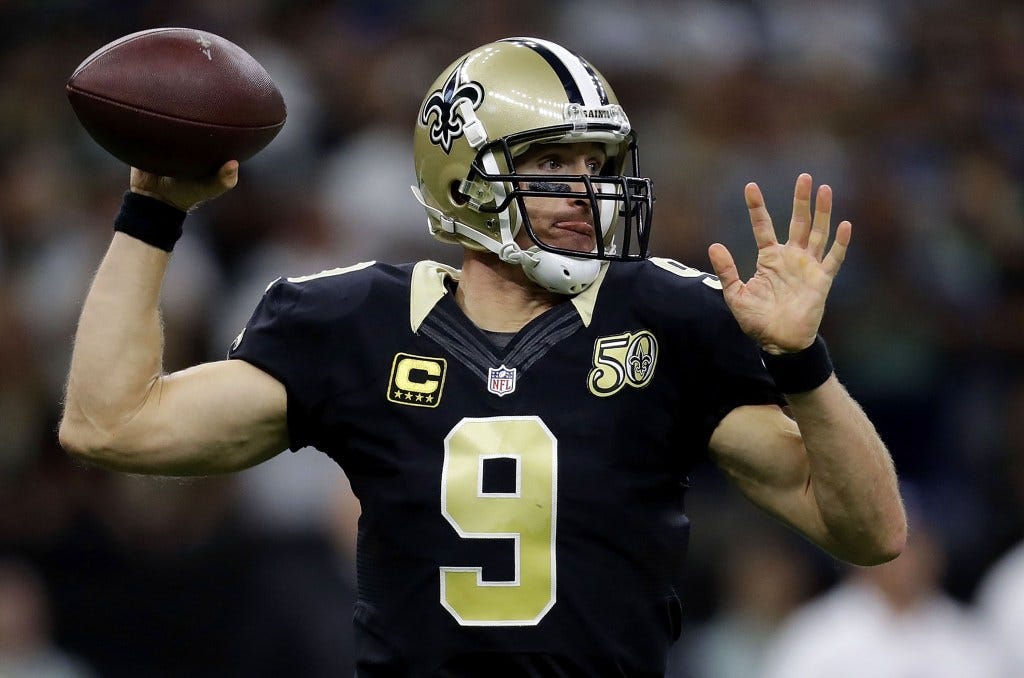
SAN FRANCISCO — If the Pro Football Hall of Fame classes get any younger, we may need to check whether inductees finished college and are no longer eligible for the transfer portal.
The Class of 2026, announced Thursday as part of the NFL Honors show, included two first-year eligibles and two second-year eligibles, a recency-heavy Modern-Era result that will reignite the debate over how quickly today’s stars are being fast-tracked even as worthy older candidates continue to wait.
Still, the merits are inarguable for quarterback Drew Brees and wide receiver Larry Fitzgerald in their first year of eligibility, while linebacker Luke Kuechly and kicker Adam Vinatieri are more than acceptable on their second try. But that’s not the whole story. We will circle back to all inductees later.
One senior player was the only survivor from the Group of Five that allows selectors to vote for only three from a mixed bag of five candidates. The lone inductee is the great running back Roger Craig. We offer a link to a special sidebar on Craig.
We will drill into the process and politics later. The result verifies ESPN’s big scoops that witheld their own library of key historic information. That curiously selective reporting revealed that Belichick did not clear the bar in his first year of eligibility, igniting a predictable firestorm across social media and the rest of the media universe.
As for the new young Hall of Famers. …
The result did not exactly sneak up on us. Continuing a trend toward recency, the Modern-Era finalist list for the Class of 2026 leaned heavily into the new. Nine of the 15 finalists were in their first or second year of eligibility, including four first-year candidates.
The slate also included 10 returning finalists from the Class of 2025 and one player who reached finalist status for the first time in his sixth year of eligibility, a mix that underscored how quickly the room now moves in on the newest names even before the final vote is cast.
In the “group of five” — three Senior players, a coach and a contributor — Craig’s election means coach Bill Belichick, owner Robert Kraft, quarterback Ken Anderson and defensive lineman L. C. Greenwood fell short of the 80 percent approval threshold required for election by the 50-member Selection Committee. Under the current rules, each selector can choose only three of the five finalists in this pool, which turns the vote into a direct competition rather than a simple measure of merit.
Now, about the four younger inductess. …
It is understabdabke that the Hall occasionally elects a first-year candidate. That is often the correct decision. What bothers me is the direction of the process over time. When you chart Hall classes across the modern history of the institution, early-eligibility elections do not rise in a neat straight line, but the center of gravity has clearly shifted. Early selections were once sporadic. In the modern era they have become routine, and the Class of 2026 is a vivid example: two first-year eligibles and two second-year eligibles emerged from the Modern-Era lane in the same class.
This is how recency bias works in practice. It is not a question of whether Brees and Fitzgerald deserve the honor. They do. It is about what the pace of their election reveals about the room’s priorities. When the newest names routinely accelerate, the backlog does not simply remain a backlog. It becomes a long-term holding tank for candidates who may be just as worthy but no longer feel urgent. That is not a moral failure. It is a process drift.
The 80 percent rule; why “group of five” is not apples-to-apples
Now layer in the rule structure that defined the last two classes. Under the current system, election requires an 80 percent threshold from the full committee, and the ballots are capped. That means the vote does not merely measure support. It forces trade-offs. Trade-offs change behavior. They reward momentum. They reward immediacy. They also reward scarcity.
The clearest example is that same “group of five.” Seniors already endured decades of being ignored in the Modern-Era pipeline, and when they finally reach the room, the opportunity often feels finite. A coach or contributor can feel more returnable. There was already talk about Belichick becoming a priority in the next class.
Once a Senior finalist fails at the final step, his candidacy can be quietly tainted. Under a capped ballot, it becomes rational for selectors to prioritize the Senior player because the window feels smaller, while assuming the coach or contributor can come back with less damage.
That is why the result is not surprising: the lone survivor from the group of five for a second consecutive year was again a Senior player, Craig. Meanwhile Belichick, Kraft, Anderson, and Greenwood fell short of the 80 percent threshold under a system that made direct competition unavoidable. That is the point. The structure itself can shape outcomes at the margin, even when voters are acting in good faith.
The Senior track is not just a merit debate; it is a scarcity debate. Once a Senior finally reaches the full committee and fails to clear the 80 percent approval bar, the candidacy can quietly lose oxygen even if the underlying case has not changed.
That experience is why the current 3-of-5 structure tilts toward Seniors: once a Senior makes the room, many selectors feel the urgency to act, because the opportunity does not always come back cleanly.
I learned that firsthand in 2024, when I helped elevate Senior wide receiver Art Powell into finalist position, only to watch him stall in the full committee room, when all he required was 80 percent thumbs up in isolation to other candidates. The barrier was not malice. It was bandwidth. A five-minute presentation to a committee that did not live the 1960s is a hard sell, and Powell could not reach the threshold even in a format that did not force selectors into direct trade-offs. That is the context for why a Senior election now feels like a narrow escape, not a coronation.
Elephant in the Room
Below, we present mini-bios on the inductees — the stars of the week — and a behind-the-curtain look at how the process unfolded during the January selection meeting.
But we are not going to tip-toe around the elephant in the room. ESPN’s selective framing in its scoop allowed others — less informed social media and plenty of mainstream follow-ups — to draw misguided conclusions that ignored key context. The restrictive process matters, too, but the coverage helped steer the public conversation away from the most relevant facts.
I mentioned some of this earlier, but with the selections now revealed, it bears repeating.
We at Hall of Football responded as fully as we could after the ESPN report that Belichick would not be part of the Hall of Fame Class of 2026. The report cited unnamed sources and then tried to explain the outcome.
Here is the problem: the report leaned on innuendo while sidestepping the most consequential chapter of the story. If you are going to invoke integrity questions around Belichick, you cannot treat Spygate as optional background. In 2007, the league fined Belichick $500,000, the maximum allowed and the largest amount imposed on a coach in the league’s then 87-year history. The Patriots paid an additional $250,000 and lost their first-round pick in the 2008 draft. When Belichick refused to comply with an NFL order to turn over the videos, league officials went to team facilities and destroyed the tapes.
Many reactions dismissed Spygate with a shrug, and some even pointed to New England’s continued success afterward as if winning erased wrongdoing. It did not. Spygate also carried league-level implications. U.S. Senator Arlen Specter (R-PA), then the ranking member of the Senate Judiciary Committee, wrote NFL Commissioner Roger Goodell in 2007 expressing concern over the “inexplicable destruction of the tapes,” and raised the possibility of congressional scrutiny tied to the league’s antitrust posture.
Spygate was not a footnote. It cost the Patriots, embarrassed the league, and created political risk for the NFL at exactly the wrong time. That context matters when people pretend the only discussion is “great coach” versus “snub.”
It also matters because the same ESPN reporters, Don Van Natta Jr. and Seth Wickersham, have written before about how Spygate echoed forward. In a 2015 ESPN story, they argued that Goodell’s handling of Deflategate was influenced by his earlier handling of Spygate, and they explored the league’s motivations and internal pressures in protecting the shield.
So when that same duo produced a new scoop that made no meaningful mention of the Belichick-related controversies they previously documented, it raised a fair question: why omit the most relevant context now?
The result was reaction run amok.
For the record, I voted for Belichick — and for Roger Craig — and I will tell you why.
Craig deserves his own space, and I cover that in a separate sidebar. It was never about snubbing anyone. It was about navigating a process that forces trade-offs.
As long as Belichick remains in the coaching lane, he blocks access to other deserving coaches who have been waiting, such as Mike Holmgren and Mike Shanahan. Despite anything else, Belichick’s accomplishments were HOF-worthy.
A vote is not always a pure statement of biography and a some imaginary net sum ot so called positives and negatives. Sometimes it is a strategic attempt to keep the process moving toward the best overall results for the Hall of Fame within the confines of the rules.
Now, as Belichick himself might say, on to 2027.
🏈🏈🏈🏈🏈🏈🏈🏈🏈
The Process
Behind the curtain: Selection play-by-play, held via Zoom in January
The ballot: Three senior players, one coach, one contributor. Selectors (50 total) voted for three of the five. Only those candidates who received 80 percent of the vote were elected
Ken Anderson, Senior: QB: Eliminated in vote for three
Bill Belichick, Coach: Eliminated in vote for three
L. C. Greenwood, Senior: DL: Eliminated in vote for three
Robert Kraft, Contributor: Owner: Eliminated in vote for three
🏈Roger Craig, Senior: RB, Elected🏈
15 MODERN-ERA FINALISTS
Selectors (50) made incremental cuts to 10 and seven. To be elected, a player had to receive 80 percent of the votes for five of the seven. Selectors were not told the result of the final vote. Listed in chronological order of elimination.
Jahri Evans, G: Eliminated in cut to 10
Torry Holt, WR: Eliminated in cut to 10
Eli Manning, QB: Eliminated in cu to 10
Reggie Wayne, WR: Eliminated in cut to 10
Kevin Williams, DT: Eliminated in cut to 10
Frank Gore, RB (first year eligible): Eliminated in cut to seven
Jason Witten, TE (first year eligible): Eliminated in cut to seven
Darren Woodson, S: Eliminated in cut to seven
Willie Anderson, OT: Eliminated in vote for five
Terrell Suggs, Edge: Eliminated in vote for five
Marshal Yanda, G: Eliminated in vote for five
ELECTED
🏈Drew Brees, QB (first year eligible): Elected🏈
🏈Larry Fitzgerald, WR (first year eligible): Elected🏈
🏈Luke Kuechly, LB (second year eligible): Elected🏈
🏈Adam Vinatieri, K (second year eligible): Elected🏈
🏈🏈🏈🏈🏈🏈🏈🏈🏈🏈🏈🏈
Bios, Facts and Stats
Now, finally, let’s celebrate the Class of 2026.
Here is a snapshot of the newest members of the Gold Jacket fraternity:
🏈🏈Drew Brees, QB (2001-2020)
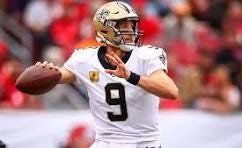
Finalist: 1 | Eligibility: 1
Size: 6-0, 209
NFL Career: 2001–05 San Diego Chargers; 2006–2020 New Orleans Saints
Seasons/Games: 20 seasons, 287 games
Selected with the first pick of the second round (32nd overall) of the 2001 NFL Draft by Chargers … After struggling for three seasons in San Diego, was named PFWA’s Most Improved Player and AP Comeback Player of the Year in 2004 with 3,159 passing yards and posting an 11-4 record as Chargers’ starter … Selected to his first of 13 Pro Bowls that season … Led the NFL in passes completed and percentage of passes completed for six seasons … Led the NFL in passing yardage seven times – all within the 2006 to 2016 seasons after joining New Orleans Saints, when he totaled at least 4,388 yards annually and surpassed the 5,000-yard mark five times … Led the NFL in passing touchdowns 2008-09, 2011-12 … AP Offensive Player of the Year 2008, 2011 … Super Bowl XLIV MVP after leading Saints past Indianapolis Colts … 2006 NFL Walter Payton Man of the Year … Career regular-season stats include 80,358 passing yards and 571 passing touchdowns; both rank second in NFL history.
🏈🏈Roger Craig, RB (1983-1993)
Finalist: 2 (once in Modern Era, 2010) | Eligibility: 29
Size: — 6-0, 222
NFL Career: 1983–90 San Francisco 49ers; 1991 Raiders; 1992–93 Minnesota Vikings
Seasons/Games: 11 seasons, 165 games
Craig might be best-known as the first player in the National Football League to total 1,000 yards rushing and receiving in the same season (1985), a feat matched by only two other players in the following 40 seasons: Hall of Famer Marshall Faulk and Christian McCaffrey, who is still very active with the San Francisco 49ers. Craig won three Super Bowls with the 49ers, where he spent eight seasons before a year with the Los Angeles Raiders and two with the Minnesota Vikings. For his career, he totaled 13,100 yards from scrimmage and scored 73 touchdowns. He was named the league’s Offensive Player of the Year in 1988, when he also finished third in MVP voting..
🏈🏈Larry Fitzgerald, WR (2004-2020)
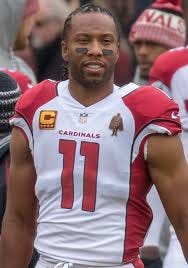
Finalist: 1 | Eligibility: 1
Size: 6-3, 218
NFL Career: 2004–2020 Arizona Cardinals
Seasons/Games: 17 seasons, 263 games
Selected with the third overall pick of the 2004 NFL Draft and spent entire career with Arizona Cardinals … Immediate starter who contributed 58 receptions for 780 yards and eight touchdowns in first year … In second season, surpassed 1,000 yards (1,409) with a league-leading 103 receptions … Would eclipse 100 catches in a season five times in his career and surpass 90 in three other times … Led NFL in receiving touchdowns twice, 2008-09 … Career stats include 1,432 career receptions for 17,492 yards – both ranking second in NFL history … Sixth on the all-time receiving touchdowns list with 121 … Helped Cardinals reach Super Bowl XLIII following 2008 season … In the 2008 playoffs, made 30 receptions for 546 yards (18.2 avg.) with seven touchdowns … Selected to 11 Pro Bowls … Named to the NFL’s All-Decade Team of the 2010s and the NFL 100 All-Time Team … 2016 co-winner of the Walter Payton NFL Man of the Year Award.
🏈🏈Luke Kuechly, ILB (2012-2019)
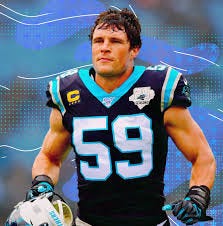
Finalist: 2 | Eligibility: 2
Size: 6-3, 238
NFL Career: 2012–2019 Carolina Panthers
Seasons/Games: 8 seasons, 118 games
Run-stopping ability combined with pass coverage skills made him rare inside linebacker to crack Top 10 of NFL drafts in his era … Led National Football League in tackles twice, including rookie season in which his 202 stops set a Panthers’ team record … Won Associated Press Defensive Rookie of the Year Award in 2012 … In 2013, upped postseason honors with AP Defensive Player of the Year Award, first-team AP All-Pro and Pro Bowl honors … In a late December game that season, credited with 24 tackles against the New Orleans Saints, tying an NFL record … Surpassed 100 tackles all eight of his NFL seasons … Finished career with nearly 1,100 tackles, 18 interceptions, 66 passes defensed, 12.5 sacks and 31 quarterback hits … Named to NFL’s All-Decade Team of the 2010s … Won Butkus Award as NFL’s top linebacker three times (2014, 2015, 2017) … Received Art Rooney Award for sportsmanship in 2017.
🏈🏈Adam Vinatieri (1996-2019)
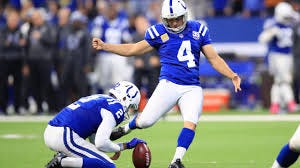
Finalist: 2 | Eligibility: 2
Size: 6-0, 212
NFL Career: 1996–2005 New England Patriots; 2006–2019 Indianapolis Colts
Seasons/Games: 24 seasons, 365 games
Signed with New England Patriots as undrafted free agent in 1996 … Scored 120 points in first season, earning spot on NFL All-Rookie Team … Over next nine seasons, set nearly every significant kicking and scoring record for Patriots, including career points (1,158), consecutive games with a field goal (25) and longest field goal (57 yards) … Provided margin of victory in two of New England’s three Super Bowl wins during his tenure with last-second field goals against the St. Louis Rams (20-17 in Super Bowl XXXVI) and Carolina Panthers (32-29 in Super Bowl XXXVIII) … Joined Colts as free agent prior to 2006 season and played with team for 14 seasons, setting most franchise kicking and scoring records, including career points (1,515) and most field goals from 50 yards plus (37) … Won fourth Super Bowl ring with Colts … Holds NFL record for career points (2,673), consecutive field goals made (44), career field goals (599) and most seasons with 100+ points (21) among many other records … Member of NFL 100 All-Time Team and NFL All-Decade Team of the 2000s.
While I question the integrity of voters who could not justify a first ballot induction for Bill Belichick, I have nothing but praise for those who inducted Brees, Fitz, Vinatieri, Kuechly, and Craig. They all appeared on my list as well...have no sympathy for Kraft, whose main contribution was merely allowing good football people to make excellent football decisions within his sandbox. 6 SB rings, and an open bar in his suite are enough reward for this owner, and all others mentioned as candidates.